


other services


When a Check Engine Light Needs Immediate Diagnostics
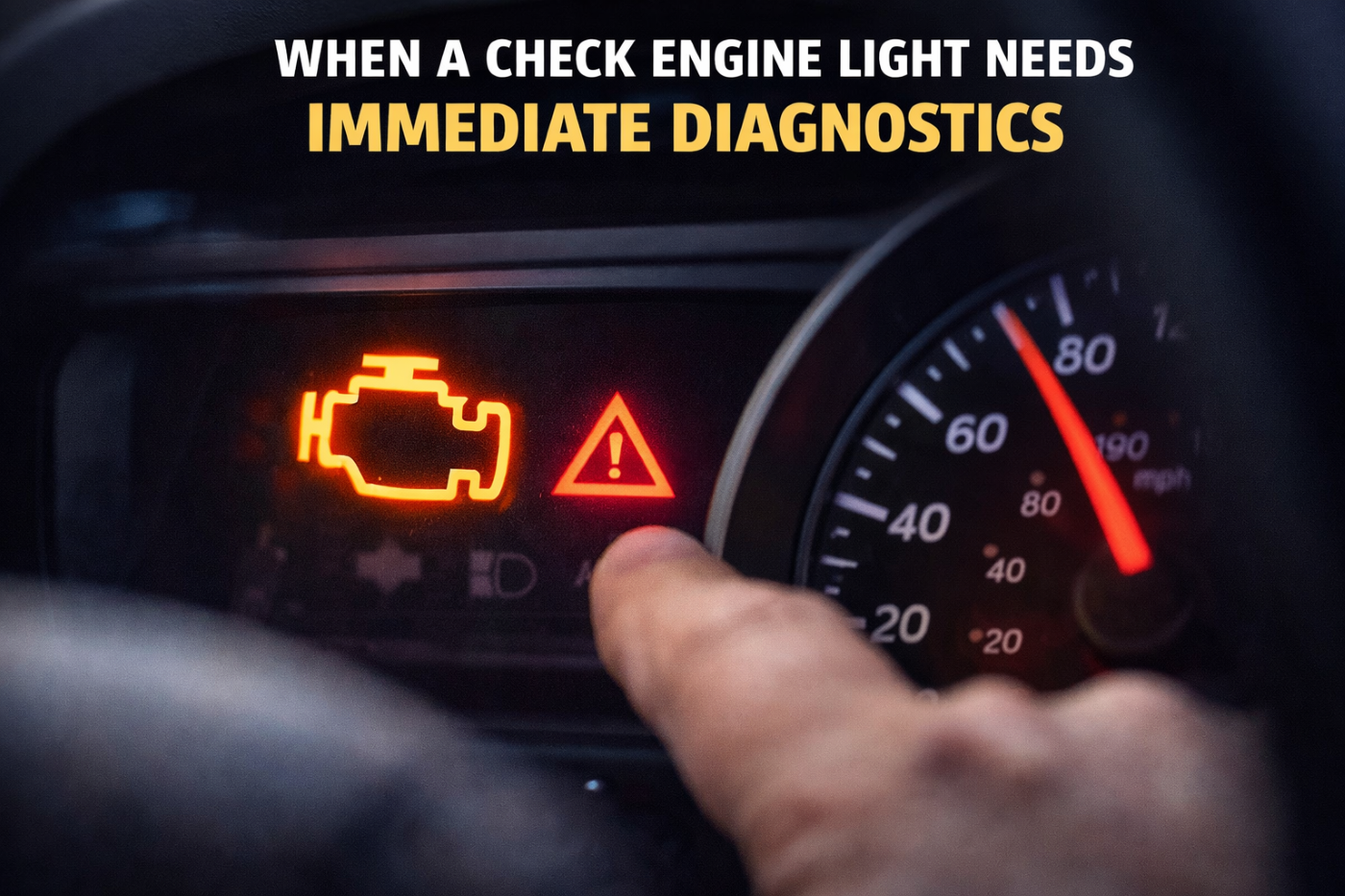
A check engine light indicates that the vehicle’s control system has detected a fault affecting engine, emissions, or related systems. The meaning of that warning depends on how the vehicle behaves at the same time, not just the light itself. Good News Auto approaches these situations by separating cosmetic or low risk alerts from conditions that increase the chance of breakdown, component damage, or safety concerns.
Why Not All Check Engine Lights Carry the Same Risk
The check engine light covers a wide range of issues, from minor sensor irregularities to faults that affect combustion, fuel delivery, or emissions control. Some problems change how the engine operates under load, while others mainly affect efficiency or emissions output.
Risk level depends on whether the fault alters how the engine runs. A vehicle that drives normally with no unusual noise, vibration, or performance change usually indicates a lower immediate risk, even though diagnostics are still required. A vehicle that runs differently than usual signals that the fault is influencing mechanical operation, which increases urgency.
High-Risk Warning Patterns That Require Immediate Attention
Certain combinations of warning lights and symptoms indicate a higher probability of rapid damage or loss of drivability. These situations justify stopping driving as soon as it is safe to do so and arranging prompt diagnostics.
Flashing vs Solid Warning Lights
A flashing check engine light typically signals an active misfire severe enough to risk catalytic converter damage. Unburned fuel entering the exhaust can overheat emissions components in a short time, which turns a drivability issue into an expensive repair.
A solid light without performance changes is often less urgent, but when it changes to flashing during driving, the risk level increases. Continued operation in that state raises the likelihood of secondary damage.
Power Loss, Rough Running, or Stalling
Noticeable power reduction, shaking at idle, hesitation under acceleration, or engine stalling indicate that combustion is not stable. These symptoms can affect safe merging, climbing grades, or maintaining speed in traffic.
When a warning light appears together with these behaviors, the issue is no longer limited to emissions or efficiency. Engine operation itself is compromised, which increases the risk of sudden breakdown or further internal damage.
Moderate-Risk Scenarios That Still Require Timely Diagnostics
A steady check engine light with no major change in drivability often points to faults in sensors, fuel system control, or emissions equipment that are not immediately destructive. The vehicle may continue to operate, but efficiency, emissions output, or long term component life can be affected.
These scenarios justify booking diagnostics soon rather than waiting for the next unrelated service. Even when the vehicle feels normal, unresolved faults can influence air fuel control, which over time may contribute to premature wear or additional warning lights.
Situations Where Driving Short-Term May Be Acceptable
Short term driving may be reasonable when the check engine light is solid, the vehicle runs smoothly, and there are no new noises, smells, or performance limitations. Under these conditions, the system has detected a fault but not one that is actively disrupting engine operation.
This does not remove the need for diagnostics. It only indicates that the immediate risk of sudden failure or rapid damage is lower, allowing time to schedule professional testing at a facility such as Good News Auto.
Risks of Delaying Diagnostics Too Long
Delaying diagnostics allows a minor fault to influence other systems. For example, inaccurate sensor data can cause fuel control to drift away from ideal ranges, which may affect emissions components or engine deposits over time.
Warning lights that remain on for extended periods also make it harder to notice new problems. When multiple issues occur, the driver loses the ability to distinguish a new high risk fault from an existing low risk one. Prompt evaluation through professional engine diagnostics keeps problems isolated and reduces the chance that a manageable issue develops into a larger repair.